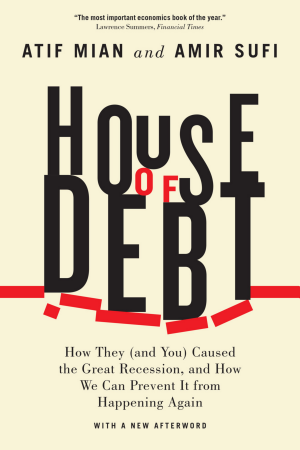
House of Debt: How They (and You) Caused the Great Recession, and How We Can Prevent It from Happening Again
Atif Mian and Amir Sufi
House of Debt: How They (and You) Caused the Great Recession, and How We Can Prevent It from Happening Again
Atif Mian and Amir Sufi
The Great American Recession of 2007-2009 resulted in the loss of eight million jobs and the loss of four million homes to foreclosures. Is it a coincidence that the United States witnessed a dramatic rise in household debt in the years before the recession—that the total amount of debt for American households doubled between 2000 and 2007 to $14 trillion? Definitely not. Armed with clear and powerful evidence, Atif Mian and Amir Sufi reveal in House of Debt how the Great Recession and Great Depression, as well as less dramatic periods of economic malaise, were caused by a large run-up in household debt followed by a significantly large drop in household spending. Though the banking crisis captured the public's attention, Mian and Sufi argue strongly with actual data that current policy is too heavily biased toward protecting banks and creditors. Increasing the flow of credit, they show, is disastrously counterproductive when the fundamental problem is too much debt. As their research shows, excessive household debt leads to foreclosures, causing individuals to spend less and save more. Less spending means less demand for goods, followed by declines in production and huge job losses. How do we end such a cycle? With a direct attack on debt, say Mian and Sufi. We can be rid of painful bubble-and-bust episodes only if the financial system moves away from its reliance on inflexible debt contracts. As an example, they propose new mortgage contracts that are built on the principle of risk-sharing, a concept that would have prevented the housing bubble from emerging in the first place. Thoroughly grounded in compelling economic evidence, House of Debt offers convincing answers to some of the most important questions facing today's economy: Why do severe recessions happen? Could we have prevented the Great Recession and its consequences? And what actions are needed to prevent such crises going forward?
Buy this book at Amazon- Publisher
- University of Chicago Press
- Year
- 2015
- ISBN-13
- 9780226277509
- Genre
- Business & Economics
- Topics
- Great RecessionHousehold debtHousing bubble and foreclosures
Awards
- Financial Times and Schroders Business Book of the Year AwardShortlisted(2014)
If you liked House of Debt: How They (and You) Caused the Great Recession, and How We Can Prevent It from Happening Again, you could also like these

Makers and Takers: The Rise of Finance and the Fall of American Business
Rana Foroohar
0 wins · 3 score
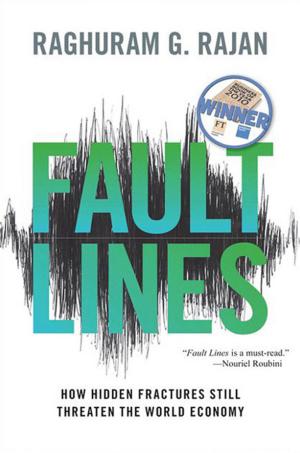
Fault Lines: How Hidden Fractures Still Threaten the World Economy
Raghuram G. Rajan
1 win · 8 score
All the Devils Are Here: The Hidden History of the Financial Crisis
Bethany McLean and Joe Nocera
0 wins · 3 score
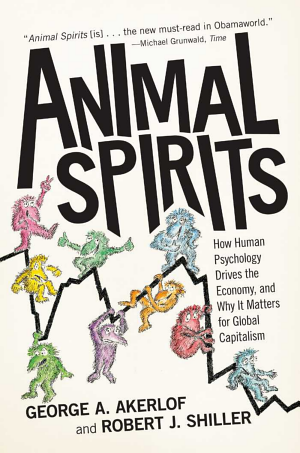
Animal Spirits: How Human Psychology Drives the Economy, and Why It Matters for Global Capitalism
George Akerlof and Robert Shiller
0 wins · 3 score
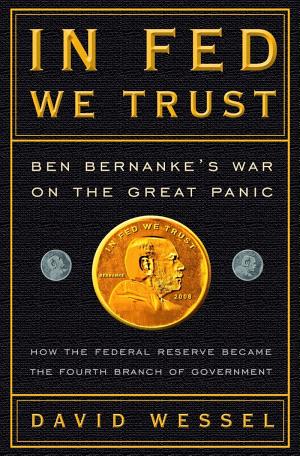
In Fed We Trust
David Wessel
0 wins · 3 score
How Markets Fail: The Logic of Economic Calamities
John Cassidy
0 wins · 4 score

Too Big to Fail: The Inside Story of How Wall Street and Washington Fought to Save the Financial System—and Themselves
Andrew Ross Sorkin
0 wins · 7 score
Lords of Finance: The Bankers Who Broke the World
Liaquat Ahamed
2 wins · 24 score
Broke: Hardship and Resilience in a City of Broken Promises
Jodie Adams Kirshner
0 wins · 2 score
Capitalism in America: A History
Alan Greenspan & Adrian Wooldridge
0 wins · 3 score
The Big Short: Inside the Doomsday Machine
Michael Lewis
1 win · 11 score
The Rise and Fall of American Growth: The U.S. Standard of Living Since the Civil War
Robert J. Gordon
0 wins · 4 score
Making it Happen: Fred Goodwin, RBS and the Men Who Blew Up the British Economy
Iain Martin
0 wins · 3 score

The Man Who Knew: The Life and Times of Alan Greenspan
Sebastian Mallaby
1 win · 8 score
When Markets Collide: Investment Strategies for the Age of Global Economic Change
Mohamed El-Erian
1 win · 8 score