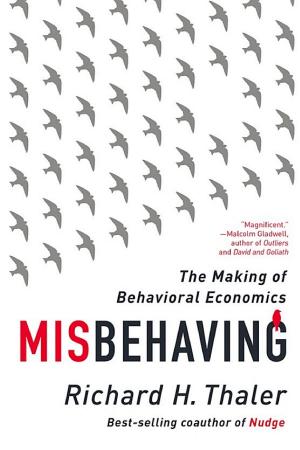
Misbehaving: The Making of Behavioural Economics
Richard Thaler
Richard Thaler won the Nobel Prize in Economics. Get ready to change the way you think about economics. Nobel laureate Richard H. Thaler has spent his career studying the radical notion that the central agents in the economy are humans—predictable, error-prone individuals. Misbehaving is his arresting, frequently hilarious account of the struggle to bring an academic discipline back down to earth—and change the way we think about economics, ourselves, and our world. Traditional economics assumes rational actors. Early in his research, Thaler realized these Spock-like automatons were nothing like real people. Whether buying a clock radio, selling basketball tickets, or applying for a mortgage, we all succumb to biases and make decisions that deviate from the standards of rationality assumed by economists. In other words, we misbehave. More importantly, our misbehavior has serious consequences. Dismissed at first by economists as an amusing sideshow, the study of human miscalculations and their effects on markets now drives efforts to make better decisions in our lives, our businesses, and our governments. Coupling recent discoveries in human psychology with a practical understanding of incentives and market behavior, Thaler enlightens readers about how to make smarter decisions in an increasingly mystifying world. He reveals how behavioral economic analysis opens up new ways to look at everything from household finance to assigning faculty offices in a new building, to TV game shows, the NFL draft, and businesses like Uber. Laced with antic stories of Thaler's spirited battles with the bastions of traditional economic thinking, Misbehaving is a singular look into profound human foibles. When economics meets psychology, the implications for individuals, managers, and policy makers are both profound and entertaining.
Buy this book at Amazon- Publisher
- W. W. Norton & Company
- Year
- 2015
- ISBN-13
- 9780393246773
- Genre
- Business & Economics
- Topics
- Behavioral economicsDecision-making biasesEconomic psychology
Awards
- Financial Times and Schroders Business Book of the Year AwardShortlisted(2015)
If you liked Misbehaving: The Making of Behavioural Economics, you could also like these
Animal Spirits: How Human Psychology Drives the Economy, and Why It Matters for Global Capitalism
George Akerlof and Robert Shiller
0 wins · 3 score
Freakonomics: A Rogue Economist Explores the Hidden Side of Everything
Steven Levitt and Stephen Dubner
0 wins · 3 score
Behave: The Biology of Humans at Our Best and Worst
Robert Sapolsky
1 win · 10 score
Adaptive Markets: Financial Evolution at the Speed of Thought
Andrew W. Lo
0 wins · 3 score
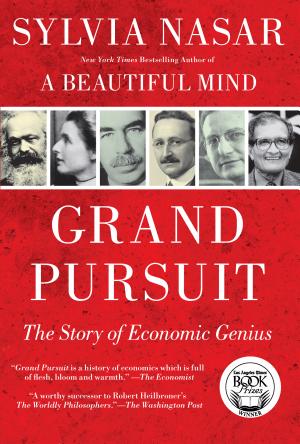
Grand Pursuit: The Story of Economic Genius
Sylvia Nasar
1 win · 8 score
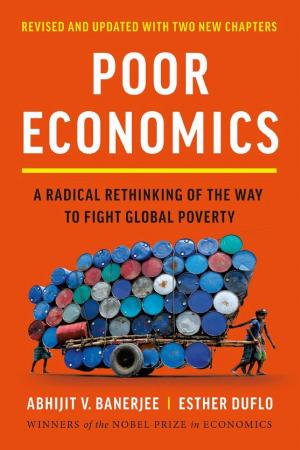
Poor Economics: A Radical Rethinking of the Way to Fight Global Poverty
Abhijit V. Banerjee and Esther Duflo
1 win · 8 score
Stumbling on Happiness
Daniel Gilbert
1 win · 8 score
How Markets Fail: The Logic of Economic Calamities
John Cassidy
0 wins · 4 score
Brainwashed: The Seductive Appeal of Mindless Neuroscience
Sally Satel and Scott O. Lilienfeld
0 wins · 3 score

Everything Is Predictable: How Bayes' Remarkable Theorem Explains the World
Tom Chivers
0 wins · 3 score

Critical Mass: How One Thing Leads to Another
Philip Ball
1 win · 8 score

Explaining Humans
Camilla Pang
1 win · 8 score
Thinking, Fast and Slow
Daniel Kahneman
1 win · 8 score

When Markets Collide: Investment Strategies for the Age of Global Economic Change
Mohamed El-Erian
1 win · 8 score
Right Kind of Wrong: Why learning to fail can teach us to thrive
Amy Edmondson
1 win · 8 score
Similar Topics
Poor Economics: A Radical Rethinking of the Way to Fight Global Poverty
Abhijit V. Banerjee and Esther Duflo
1 win · 8 score
Behavioral economicsThinking, Fast and Slow
Daniel Kahneman
1 win · 8 score
Behavioral economicsAdaptive Markets: Financial Evolution at the Speed of Thought
Andrew W. Lo
0 wins · 3 score
Behavioral economicsAnimal Spirits: How Human Psychology Drives the Economy, and Why It Matters for Global Capitalism
George Akerlof and Robert Shiller
0 wins · 3 score
Behavioral economics